Seasonal overwintering pest defense establishes a physical and chemical barrier against agricultural and garden insects that aggregate on warm, sunny siding during late September and October. In historic areas like the…
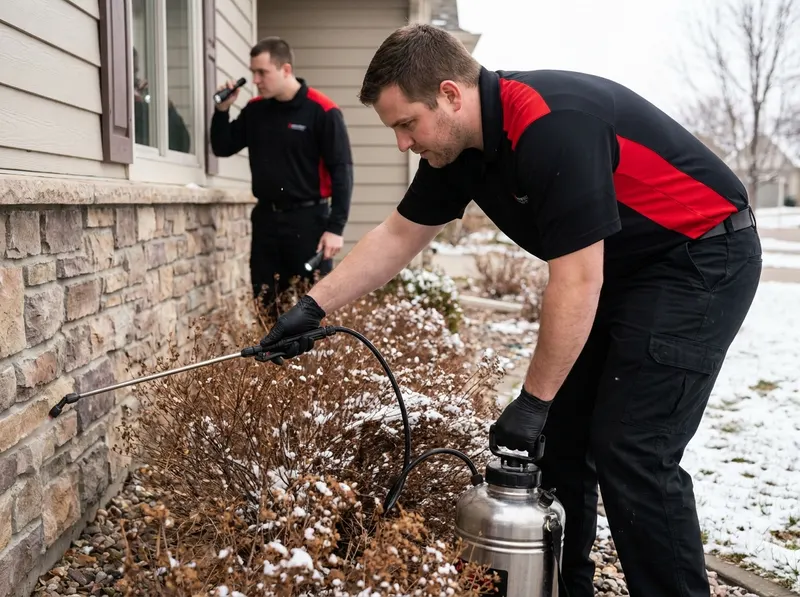
Seasonal overwintering pest defense establishes a physical and chemical barrier against agricultural and garden insects that aggregate on warm, sunny siding during late September and October. In historic areas like the Cathedral Historic District, Pettigrew Heights, and All Saints, older multi-wythe brick foundations and aged wood siding feature small settlement gaps that permit pests to slip directly into living spaces. Meanwhile, properties near open drainage ways and fields in Harmodon, Prairie Tree, and Silver Valley experience intense rodent displacement following fall harvest operations. Pests seek shelter to avoid cold mortality, settling into attic insulation and exterior wall cavities where furnace heat sustains them through sub-zero winter spells.
A dedicated overwintering exclusion service differs fundamentally from interior emergency extermination. Hardware store aerosol sprays and interior bait stations disperse pests deeper into interior floor assemblies without addressing entry pathways. Overwintering defense utilizes non-staining microencapsulated pyrethroids on foundation masonry alongside mechanical seals using copper mesh, silicone-acrylic elastomeric caulks, and galvanized hardware cloth over exterior weep screeds. This protocol prevents insects and rodents from accessing the envelope entirely, eliminating late-winter surprise appearances around interior baseboards and recessed light fixtures.
Structural entry sealing fits homes experiencing repeated fall insect invasions or scratching noises in exterior walls during early frost cycles. The operational trade-off of proactive seasonal defense is timing sensitivity: exclusion barriers must be installed during late summer or early fall prior to sustained nighttime temperatures dropping below 45 degrees Fahrenheit, as treating structures after pests have fully penetrated wall voids requires targeted interior interventions rather than clean perimeter exclusion. In established neighborhoods such as Tuthill, Riverview, Spader, and Country Club, mature tree canopies harbor dense populations of wood-boring and leaf-feeding insects, making timely mechanical seal-offs around soffits, fascia joints, and utility utility feeds critical.
Every job gets a firm, written price after a free on-site visit.
Tell us about your seasonal overwintering pest defense job in Sioux Falls and we'll send a clear, written quote, usually the same day.
 Solvian Bug Removal