Residential rodent exclusion addresses the biological reality that standard snap traps and anticoagulant baits cannot solve recurring infestations if entry pathways remain open. A juvenile house mouse requires an…
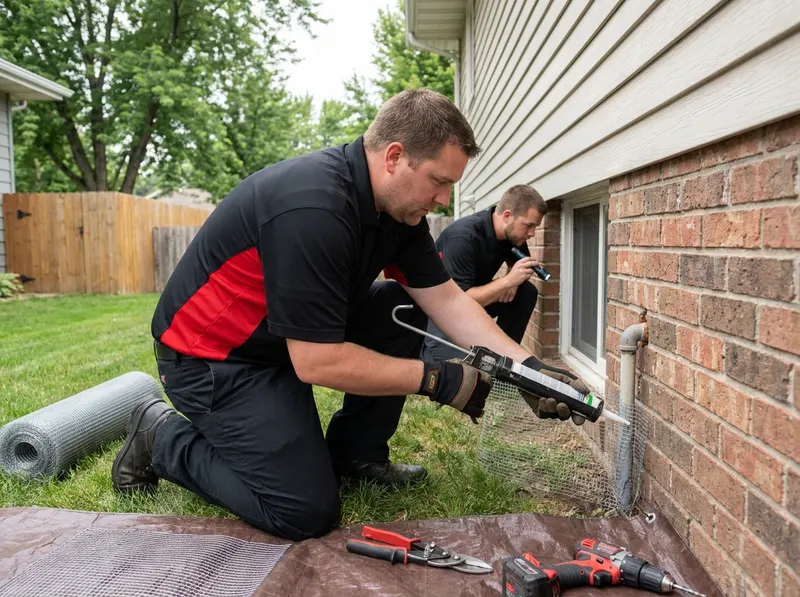
Residential rodent exclusion addresses the biological reality that standard snap traps and anticoagulant baits cannot solve recurring infestations if entry pathways remain open. A juvenile house mouse requires an opening of only 1/4 inch, roughly the diameter of an ordinary pencil, to slip past exterior siding into wall voids. When temperatures drop below freezing across Minnehaha County and Lincoln County from October through April, field mice follow warm airflow drafts leaving foundation sills and crawlspace vents. Conventional pest franchises often apply recurring poison bait boxes around a perimeter, which risks rodents dying inside drywall cavities and causing severe odor problems. By contrast, permanent mechanical exclusion utilizes 1/4-inch hardware cloth, galvanized steel flashing, and metal escutcheon plates that rodents cannot gnaw through, creating an impenetrable physical perimeter barrier.
Older architectural styles found in the Cathedral Historic District, Pettigrew Heights, and All Saints frequently feature limestone rubble foundations, balloon framing, and settled sill plates where gaps readily develop. In these multi-story residences, exclusion focuses heavily on low-elevation cellar windows, deteriorated mortar joints, and unsealed radiator pipe lines. Newer residential builds in Prairie Tree, Harmodon, and Silver Valley present distinct vulnerabilities, specifically where modern vinyl siding corners meet the concrete foundation ledge, around exterior HVAC refrigeration line bundles, and along low-clearance garage door weather seals. Properties situated near the Big Sioux River corridor in Riverview and Tuthill face heightened migration pressure from deer mice moving out of dense greenways each autumn, requiring rigid metal vent covers over exterior crawlspace access doors.
Structural exclusion is appropriate when homeowners hear active night scratching behind plaster or find droppings beneath kitchen sinks, yet want to avoid toxic residues near children and domestic pets. If a structure suffers from active roof leaks or severe rotted fascia boards, roofers must repair the primary wood decay before high-elevation soffit exclusion can safely seal attic entryways. While DIY expanding foam from hardware stores is readily chewed through by rodents within 48 hours, professional exclusion utilizes steel-backed materials engineered to withstand gnawing teeth indefinitely, delivering a permanent structural barrier rather than a recurring chemical cycle.
Every job gets a firm, written price after a free on-site visit.
Tell us about your residential rodent exclusion job in Sioux Falls and we'll send a clear, written quote, usually the same day.
 Solvian Bug Removal